April 2, 2026 · 8 min read
How to Choose a Sympathy Bouquet: An El Dorado Hills Florist's Guide
Etiquette, format, timing, and what to write on the card — a florist's guide to sending sympathy flowers without overthinking it.
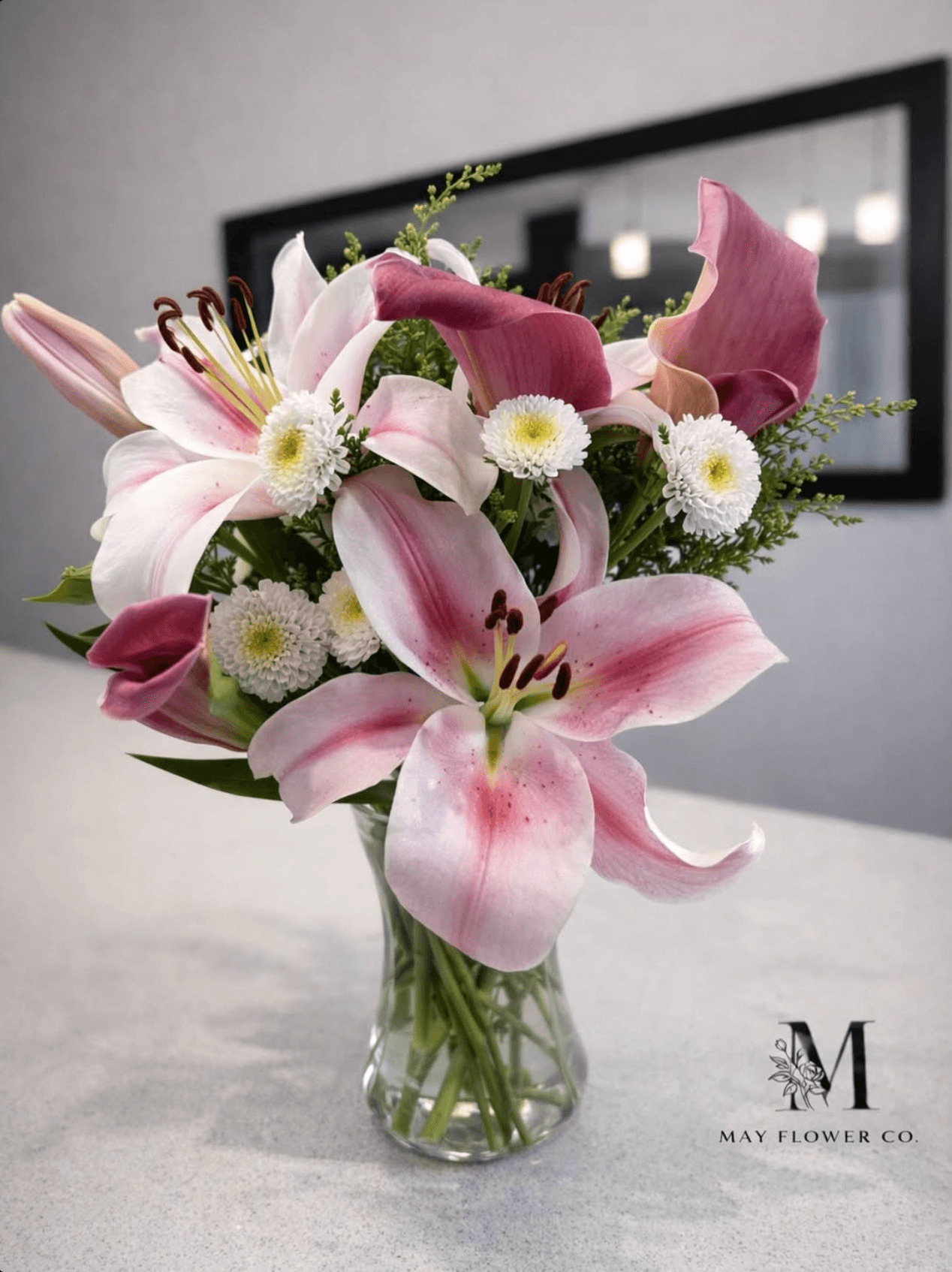
Sympathy flowers are one of the harder things to order — partly because most of us don't order them often, partly because the etiquette varies by family and faith, partly because the moment itself is uncomfortable. After several hundred sympathy arrangements out of our El Dorado Hills studio, this is what we tell people who call us unsure of what to send.
The 'in lieu of flowers' question
If the obituary or family announcement says "in lieu of flowers, please donate to…", respect it. Send a card and the requested donation. If you also want to send something physical, a small home arrangement — not a funeral spray — sent a week or two later is appropriate. The 'in lieu of' request applies most strictly to the service itself.
Some faiths discourage cut flowers at funeral services entirely. Most Jewish and many Muslim funerals fall in this category. When in doubt, ask a family friend or send a meal to the home instead.
Where to send
Three common destinations, each with different rules:
- To the home. Most personal. A studio arrangement on a kitchen counter is gentler than a large funeral spray. Right for close friends and family. We deliver to homes throughout our 15-city service area; for the larger area we can pickup-and-deliver via friends if you're not local.
- To the funeral home or church. A larger standing piece — a sympathy bouquet on a tall vessel, a standing spray, or a casket spray (close family only) — for the service itself. Call the funeral home a day before to confirm acceptance times; most accept the morning of the service from 8 a.m. onward.
- To the gravesite or memorial. Smaller, more personal, often weeks or months later. Petite or Signature size, hand-delivered to the address.
Format and palette
Three classic formats: a sympathy bouquet (a soft-palette studio arrangement on a vessel — most-requested), a standing spray (taller, more formal, for the service itself), and a casket spray (only close family commissions these). For most senders the first option is right.
Traditional sympathy palette is white, ivory, soft pink, pale lavender, dusty blue. Lilies, white roses, lisianthus, and ranunculus are the classic stems. Modern arrangements often pull color when the family wants to celebrate a life rather than mark a loss — copper and russet for someone who loved autumn, deep aubergine for someone formal, soft yellow for a gardener. If you knew the person and want to nod to a palette they would have chosen, leave a note at checkout.
When to send
Earlier than you think. Most people are unsure whether to send right away, then send weeks later, then feel they missed the moment. The first day or two after a loss is when flowers are most welcome — they sit in the kitchen during the long week of phone calls and visitors and quietly mark the time.
If you're remembering an anniversary of a loss, send three to four days before, not on the day itself. The pre-anniversary arrangement reads as a gentle bracketing of a hard week, not a reminder.
What to write on the card
Three rules: keep it short, sign with your relationship to them, don't try too hard. Some honest examples that have worked for our clients:
- “With love. Thinking of you.” — Anne
- “[Name] was wonderful. We are so sorry.” — Sarah & David
- “Holding you and your family in our thoughts this week.” — The Lockes
- “Sending flowers to keep you company while you grieve.” — Maria
- “Thinking of you. Whatever you need, please ask.” — Henry
If the loss is particularly raw, less is more. The flowers are the message; the card identifies the sender. Hand-written cards are included free at checkout.
What to avoid
- Bright, mixed-tone arrangements. Save the rainbow for housewarmings; sympathy reads quieter.
- Strongly fragranced stems in indoor services (lilies excepted — they're the classic). Funeral homes are warm rooms; perfumed stems amplify.
- Religious symbols you didn't confirm. Crosses on arrangements should match the family's faith. Default to no symbols.
- The phrase 'I know how you feel.' You don't.
Care for the recipient
If the recipient is in the middle of a hard week, they may not have the bandwidth for cut-flower care instructions. We include a small note with the most basic guidance: change the water every two days, recut stems midweek. For more, our cut flower care guide covers the rest.
Next
Send sympathy flowers.
Hand-tied studio arrangements, free delivery across our 15-city service area, free pickup at Town Center, El Dorado Hills.