February 12, 2026 · 7 min read
How to Care for Cut Flowers: An Honest Florist's Guide
An honest guide to cut flower care — water, recutting, temperature, the myths, and what to actually do in the first 24 hours.
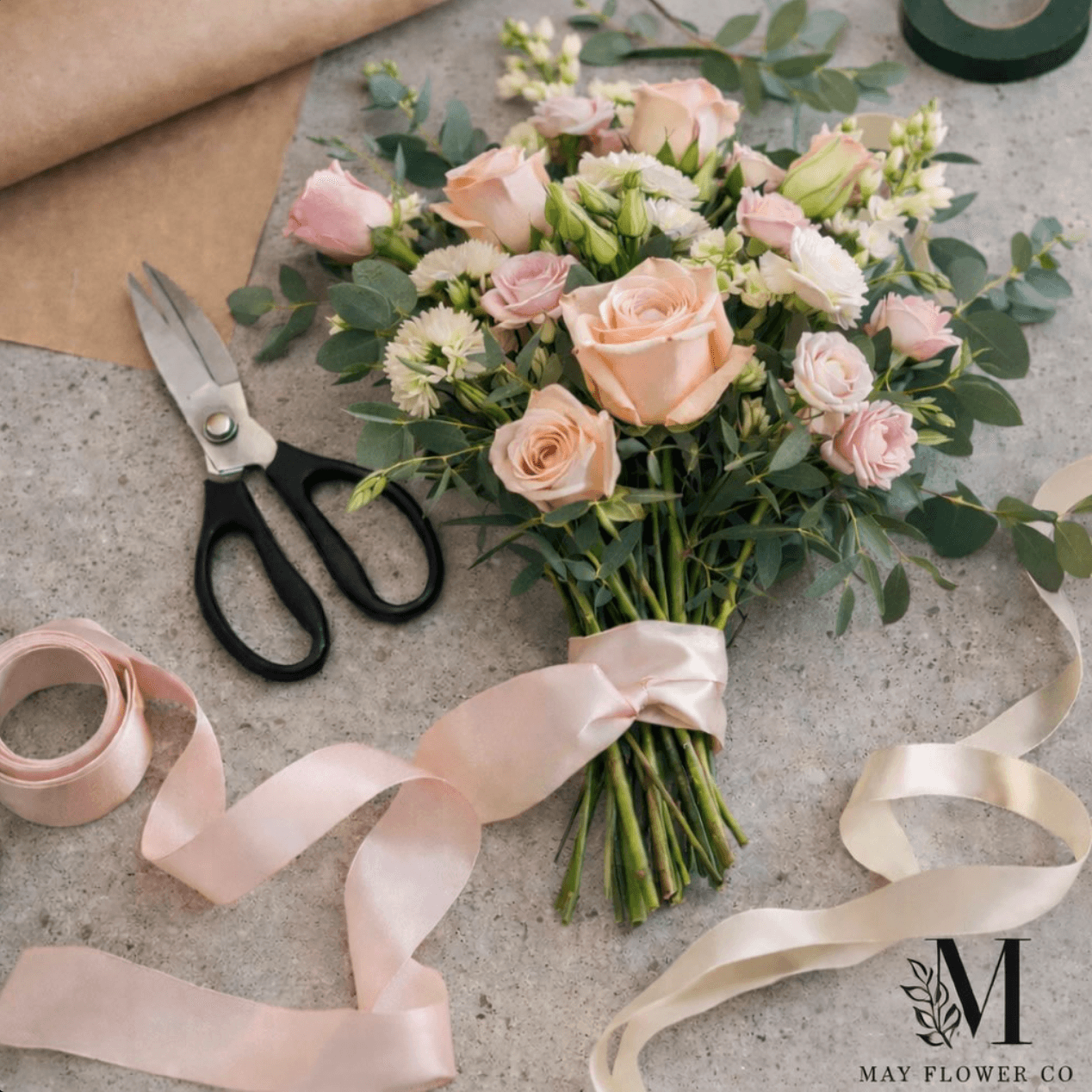
There is a lot of cut-flower care advice on the internet, and most of it is either too vague ("give them clean water") or too specific ("add a penny to the vase"). After years of building studio arrangements and watching them in customers' homes, this is the short, honest version of what actually matters and what doesn't.
The first 24 hours
When a fresh-cut arrangement arrives, it has been through several hours of stress: the cooler, the van, the doorstep. The single most important thing you can do is to give it a clean, full vase of water as soon as possible — within an hour ideally.
- Find a clean vase that's tall enough to hold the stems without crowding. The arrangement we built may already be in a vessel — if so, just top up the water.
- Fill it most of the way with cool tap water. Most flowers prefer cool to room temperature; very cold water can shock them.
- If the stems were wrapped, unwrap them carefully (don't yank). The wrapping is for transit, not display.
- Recut every stem at a 45-degree angle, removing the bottom inch. We'll cover why below.
- Strip any leaves that would sit below the water line. Leaves submerged in water rot fast and cloud the vessel.
- Place out of direct sun and away from heating vents and fruit bowls. Both of those will significantly shorten the vase life.
Why recutting matters
Cut flowers draw water through their stems via capillary action — the same way a paper towel wicks. Within hours of being cut, the freshly exposed end starts to seal up with sap and air bubbles, both of which block water uptake. Recutting an inch off the bottom at a 45-degree angle reopens the channel and gives you a fresh, large surface area to draw water through.
Recut the stems again at the 3- and 5-day marks. It's the single most effective thing you can do to extend vase life beyond the first weekend.
Water and the daily refresh
Change the water every two to three days. Cloudy water is bacterial growth, and bacteria is what kills cut flowers as fast as anything else.
If your arrangement came with a packet of flower food, use it the first time. After that, the food matters less than the freshness of the water — clean water beats old water plus food. If you don't have flower food, plain tap water is fine for the duration of the arrangement.
Temperature, light, and where to put it
- Cool is good. 65–72°F is ideal. Cold drafts and warm rooms both shorten vase life.
- Indirect light is best. Direct afternoon sun will open every bud at once and finish the arrangement in three days. North or east-facing windows are gentler.
- Away from fruit. Apples, bananas, pears, and tomatoes give off ethylene gas as they ripen, and ethylene accelerates flower aging. Keep the arrangement out of the kitchen if possible.
- Away from heat sources. Heating vents, fireplaces, the top of a refrigerator (which exhausts warm air), and direct A/C blasts all shorten the life of an arrangement.
The myths, and what to actually do
Pennies in the vase
There's an old idea that dropping a copper penny in the vase keeps flowers fresh — the theory being that copper acts as an antibacterial. Modern pennies are mostly zinc, and even copper pennies don't release enough ions to do meaningful work in a vase. Skip it. Clean water and recutting do the real job.
Aspirin, sugar, and bleach
Aspirin acidifies water slightly, which can help certain stems uptake water — but commercial flower food does this much better. A drop of bleach can help suppress bacteria but is easy to overdo and damaging at higher concentrations. A teaspoon of sugar feeds the flowers but also feeds the bacteria. The honest answer: just change the water.
Hairspray on petals
Some bridal-prep guides suggest hairspray to "set" petals. Don't. It seals the stomata and accelerates browning. If your arrangement looks tired the morning of an event, recut and redress the water — not the spray.
Bloom-by-bloom notes
Some quick stem-specific tips for the most common things in our arrangements:
- Garden roses — strip thorns below the water line, recut every two days, expect 5-7 days vase life.
- Peonies — open from a tight bud, give them 24-48 hours; once fully open they last another 4-5 days.
- Ranunculus — fragile stems; recut gently. Vase life of 5-7 days with cool water.
- Lilies — pinch the pollen anthers off when they open to extend life and prevent staining.
- Hydrangea — recut and submerge the entire stem (and head if possible) in cool water for an hour if it droops. Hydrangea drinks through the head as well as the stem.
- Tulips — keep growing in the vase. Every day they'll get an inch taller and bend toward the light. Rotate the vase daily for symmetry.
- Eucalyptus and other foliage — lasts longer than most blooms; can be redried for keepsake use.
When to throw it out
Most studio arrangements have a useful life of 5-9 days. The signs it's done: the water is cloudy and won't clear after a refresh, multiple blooms are browning at the edges, and the stems feel soft when squeezed. A few stems may outlast the rest — if you have a clean smaller vase, pull the still-fresh stems and put them on a desk or nightstand for another few days.
If you want flowers in the house consistently, weekly subscriptions are how we recommend doing it — same arrangement size delivered every Friday, with a 10% standing discount. We've written a separate guide on when a subscription beats a one-time bouquet, or read more on the shop page.
Next
Order an arrangement.
Three sizes, composed each morning. Free delivery Tue–Sat across our 15-city service area or pickup at Town Center, El Dorado Hills.