March 13, 2026 · 9 min read
El Dorado Hills Wedding Flower Guide: What's in Season Month by Month
Month-by-month, what's actually cutting at the growers — and what to ask for if your wedding lands at the edge of a season.
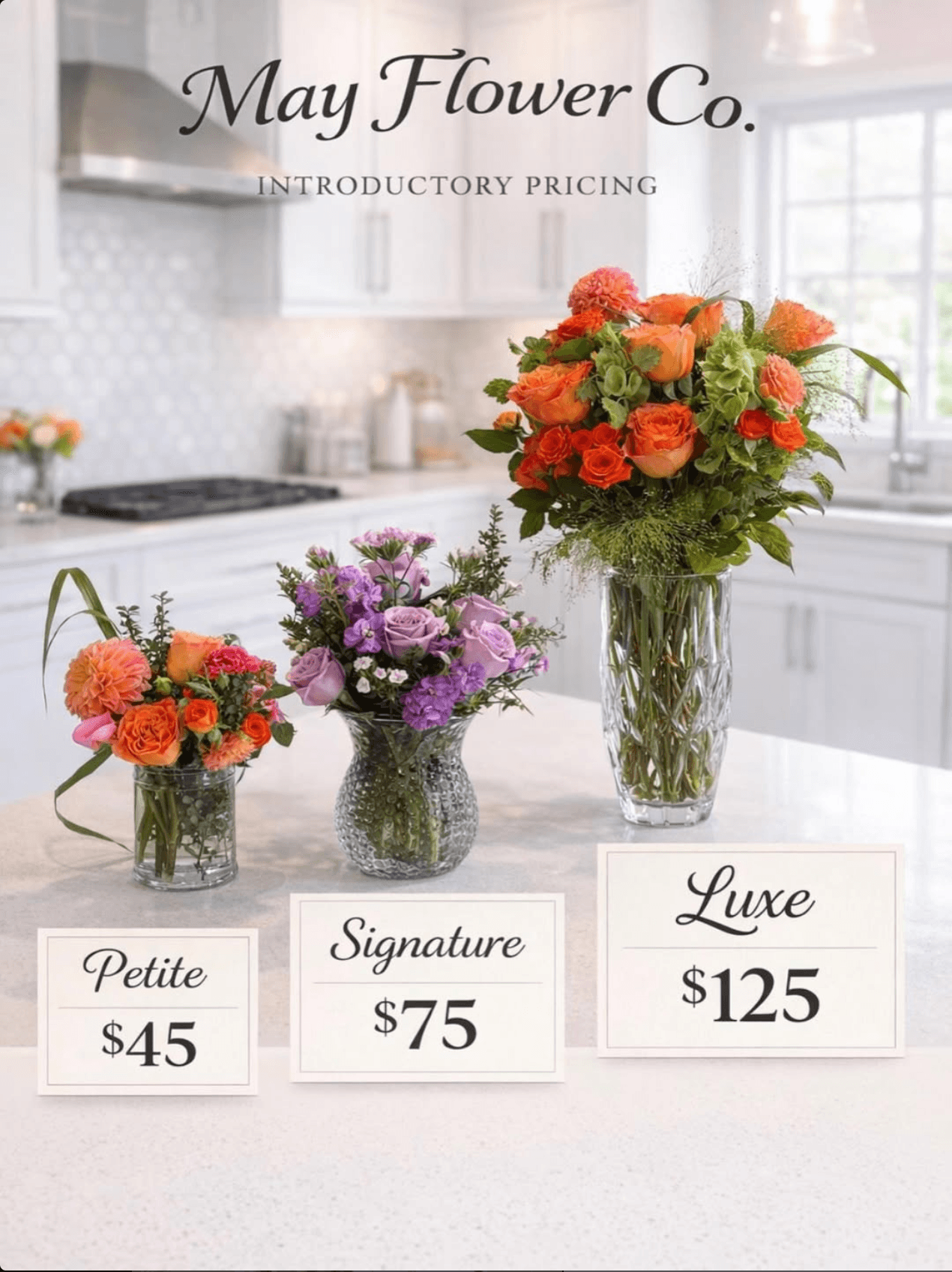
Most couples choose their wedding palette before they think about season. That's backwards. The palette decides what we have to spend; the season decides what we can actually source. This is a month-by-month guide to what's cutting in the Sacramento-area growers we buy from — what works for bouquets, what works for arches, and what we'd push you away from at each end of the calendar.
We're based in El Dorado Hills and source most stems within a hundred miles — Yolo, Solano, Placer, El Dorado, Sacramento, and Amador counties. Some growers run nearly year-round in protected greenhouses; others only cut for a few weeks. The map below leans on our own week-to-week buying.
How to use this guide
Three rules. First, the month listed is when we'd lean on a stem; most stems have a longer technical season but a shorter sweet spot. Second, every wedding has a hold-up window — you need stems that survive a 4–8 hour event in the actual venue temperature. Third, even a small forecast shift moves the schedule; we revisit two weeks before the date.
Late winter — January through early March
Slowest period at the local growers. The cooler relies more on imports — Dutch and Ecuadorian roses, lisianthus, lilies. Local stems opening up: hellebores, the first ranunculus and anemones from greenhouse growers, narcissus from the coast, late camellias from foothill yards.
- Best for: winter-white palettes, deep aubergine/burgundy, garden style with a lot of foliage texture.
- Avoid: peonies (still six weeks out), dahlias (months out), heat-tolerant garden mixes (the field stock won't be there).
- Sweet spot stems: hellebore, ranunculus, anemone, lisianthus, garden roses (greenhouse).
Spring — March through May
Spring opens fast. Tulips and daffodils anchor March; April brings the first peonies and a wide ranunculus harvest; May is the height of garden roses, sweet peas, snapdragons, and the start of greenhouse dahlias. This is one of our favourite windows for soft, garden-style weddings.
We source peonies from a few Loomis and Newcastle growers — see our Loomis and Newcastle pages for context on the orchards we work with. Their main cut runs roughly mid-April through mid-June, weather depending.
- Best for: garden-style and full-volume weddings; soft pinks, peach, blush, ivory, copper.
- Avoid: dahlia-heavy designs (still field-thin); tropicals (out of season).
- Sweet spot stems: peony, garden rose, ranunculus, sweet pea, lisianthus, snapdragon, lilac (brief), tulip.
Summer — June through August
Summer in the foothills is hot. Outdoor venues regularly hit 90°F at ceremony time. Stems that look beautiful in a 70°F studio can wilt in three hours under direct sun. We push couples toward dahlia, garden rose, lisianthus, zinnia, and sunflower — they hold. We push them away from hydrangea-heavy installations and certain peonies if there's a chance of post-bloom heat exposure.
- Best for: bright dahlia-led palettes; garden white-and-green; sunflower-and-rust autumn-toned designs.
- Avoid: hydrangea in direct sun without a misted source; sweet peas (finished); peony (window closing).
- Sweet spot stems: dahlia, garden rose, zinnia, lisianthus, snapdragon, eucalyptus seed, scabiosa.
Late summer & autumn — September through October
Dahlia's grand finale plus the start of autumn-tone palettes. Copper roses, russet chrysanthemums, dried hydrangea, smoke bush, snowberry, the first persimmon-fruited stems for installation work. Apple Hill weddings — see our Camino page — typically pull copper, russet, ivory, and dusty pink to match orchard colour.
- Best for: autumn palettes — copper, russet, ivory, mustard; dried-element installations.
- Avoid: tulip, peony, lily-of-the-valley (all months past).
- Sweet spot stems: dahlia (early Sept), chrysanthemum, garden rose (second flush), dried hydrangea, persimmon stems.
Late autumn & winter — November through December
Field cuts taper. Garden roses come back as second-flush; dried elements take over installation work. Cedar, pine, juniper berries, blue spruce, and amaryllis show up for the holiday wedding window. December weddings are usually intimate elopements — we love them and they ship within our service area without much travel logistics.
- Best for: evergreen-and-amaryllis holiday palettes; quiet cool-toned ivory and pale-blue weddings.
- Avoid: dahlias (gone); peonies (months away); fresh hydrangea (in-store but expensive).
- Sweet spot stems: amaryllis, paperwhites, hellebore (returning), garden roses, conifer foliage.
What this means for your palette
Two practical takeaways for couples we discovery-call this season:
- Pick a palette that has a long sweet spot near your date. A 'soft pink and peach' palette has windows in March, May, July, and September. A 'true blush peony' palette has six weeks. The longer your runway, the easier the proposal.
- Tell us what you don't want. 'No carnations' and 'nothing tropical' help more than 'romantic and timeless'. We compose the rest.
For a deeper read on what a wedding actually costs in this region, see our Northern California wedding flower budget breakdown.
Next
Begin a wedding inquiry.
Send the date, venue, and a rough guest count. We reply within two business days with a palette starting point shaped by the season.