February 26, 2026 · 9 min read
What's In Season: A Month-by-Month Guide to Northern California Florals
What's actually in season at Northern California growers, month by month — what we cut, what we order, and what to ask for.
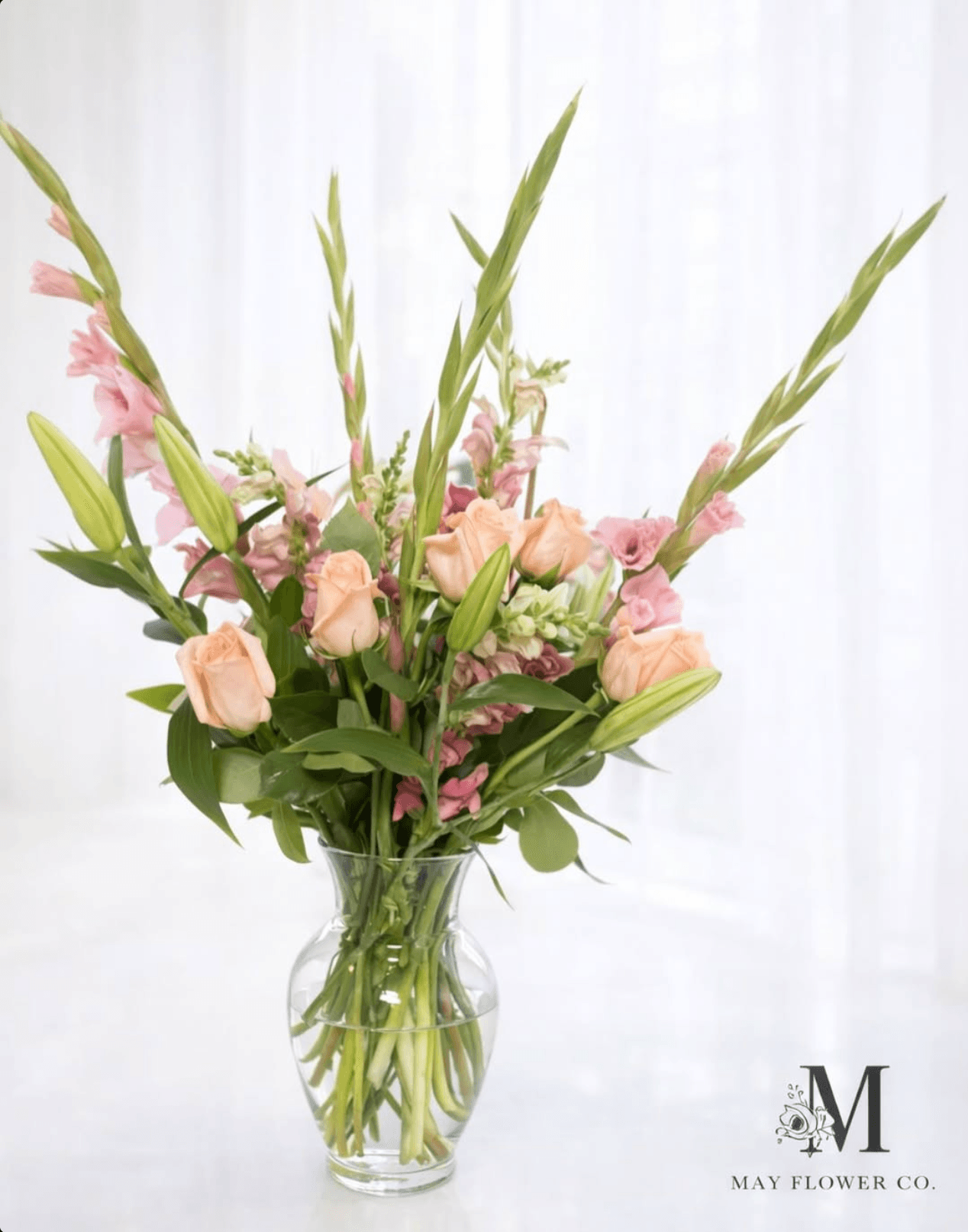
Most of the flowers we use are sourced within a hundred miles of the studio — small farms in Yolo, Solano, and the Sierra foothills. The advantage of working with local growers is that the season actually shows up in our work; the disadvantage is that we can't always get whatever you imagine on a Tuesday in February. Here's a month-by-month picture of what's available, when, and what we'd recommend ordering across the year.
January
January is the quietest month at the growers. The fields are mostly between cycles, and our cooler relies more heavily on imports — Dutch and South American spray roses, lilies, lisianthus, lots of greens. What's local: hellebores (the first sign of spring), early ranunculus from a few greenhouse growers, narcissus from coastal farms, and the last of the dried botanical work from autumn.
February
Valentine's Day is the engine here. Garden roses (imported and local greenhouse), tulips from Northern California fields, anemones, ranunculus in full swing, and the first hyacinth and freesia from the coast. Hellebores are still strong. The local cool-flower season is opening — pansies, viola, columbine.
March
March is a transitional month and one of our favorite to compose for. Late tulips and early daffodils overlap with the first sweet peas, the earliest peonies (from heated growers), and a wide range of ranunculus. Spring branches — quince, pear, plum — are at their flowering peak and we use them heavily for ceremony installations and tall arrangements.
April
Spring is fully open. Peonies start cutting reliably from local farms (especially around Loomis and Newcastle), garden roses are abundant, sweet peas are in their prime, and snapdragons start showing. Lilac is brief but spectacular if you can catch it. This is the best month for soft, garden-style arrangements.
May
Mother's Day is the busy weekend. Peonies are still strong, garden roses are doing the heavy lifting, ranunculus is finishing, lisianthus is starting, and we see the first dahlias from greenhouse growers. Lupine, larkspur, and the first delphinium from the coast all show up here. May is also the start of strong wedding season — most of our local weddings between May and October.
June
Peonies finish (catch them in early June or wait a year). Garden roses continue, full dahlia season is opening, sweet peas finish, and we move into a stronger summer palette: zinnias, cosmos, sunflowers, and the first lisianthus. June weddings often want a soft, garden-y palette before the heat changes the field colors.
July
Full summer. Dahlias are at their peak, sunflowers are abundant, zinnias and cosmos in many colors, lisianthus is strong. Foliage shifts toward brassica and heuchera. The local heat changes both what cuts well and what holds — most July arrangements lean either bright (warm yellow / orange / pink) or cool (white, ivory, sage). We start using more dried elements for installations to handle long ceremony hours.
August
Dahlias are still the headliner. Late roses, more lisianthus, the start of celosia and amaranth, lots of zinnia and rudbeckia, and early eucalyptus seed cuts. August installations use a lot of bunny tail, dried palms, and copper-toned grasses to read against the long, warm summer light.
September
Dahlia season's grand finale, plus the start of autumn palettes — copper roses, russet chrysanthemums, the first dried hydrangea, smoke bush, and the first snowberry. September weddings are some of our favorites because the palette can move warmer (copper, peach, dusty rose) without losing summer's textural variety.
October
Full autumn at the growers. Chrysanthemums in every form, pampas and bunny tail, dried hydrangea, dahlia seconds, oak leaves, late dahlias, and persimmons (fruited stems for installation work). Apple Hill weddings at this time of year tend to want a palette that picks up the orchard color directly — copper, russet, ivory, dusty pink.
November
The autumn palette deepens. Garden roses come back as the second-flush cuts, chrysanthemums continue, dried elements take over installation work. We use a lot of preserved palms, ranunculus seed pods, dried ferns, and the first coniferous greens for late-November holiday arrangements.
December
Holiday arrangements lean evergreen. Cedar, pine, fir, blue spruce, juniper berries, and red and white amaryllis. Garden roses still cut from coastal greenhouses. Hellebores start showing again. Hyacinth and paperwhites for the indoor-bulb season. Most December weddings are intimate elopements.
Putting it together
If you're planning around a specific date, the broad rule is: trust the field. The cooler decides what we can compose, and we'd rather give you a palette that's at its peak than one that's been imported in from out of region. For most occasions — birthdays, anniversaries, sympathies, just-because — the seasonal palette is what we'll lead with anyway.
For weddings and large events, we work backward from the date during the proposal phase, picking a palette that has at least two months of stem options on either side of the day. This gives us flexibility if a particular grower has a short crop. For a stem-by-stem look at what couples are actually using this year, see the most popular wedding flowers of 2026; or read more on our weddings page.
Next
Order in season.
Studio arrangements composed each morning around what's actually cutting that week. Hand-delivered Tue–Sat across our 15-city service area.